

By Connor Boike, Founder and CEO of Nidrogen Group
I get this question more than almost any other.
A wrestler walks into their first practice. They do not own wrestling shoes yet. They look down at their running shoes and think, these should work fine for now.
I understand the logic. Running shoes are athletic. They are built for movement. They cost money that has already been spent.
But the moment that wrestler steps on the mat, the difference becomes obvious. Shots feel slow. Balance feels off. Footing is uncertain in ways that have nothing to do with skill.
The truth is, running shoes and wrestling shoes are built for completely opposite purposes. Using the wrong one does not just limit performance. It can increase injury risk and slow development at a critical stage.
Here is exactly why.
The Sole Is Built for Different Surfaces
Running shoes are designed for pavement, tracks, and trails.
The thick, cushioned sole absorbs repetitive impact from forward motion. It is engineered to protect joints over long distances on hard surfaces. That cushioning makes sense for running.
On a wrestling mat, that same cushioning becomes a liability. It raises your center of gravity, reduces mat feel, and creates instability during level changes and direction shifts. You are essentially balancing on a platform instead of feeling the mat beneath your feet.
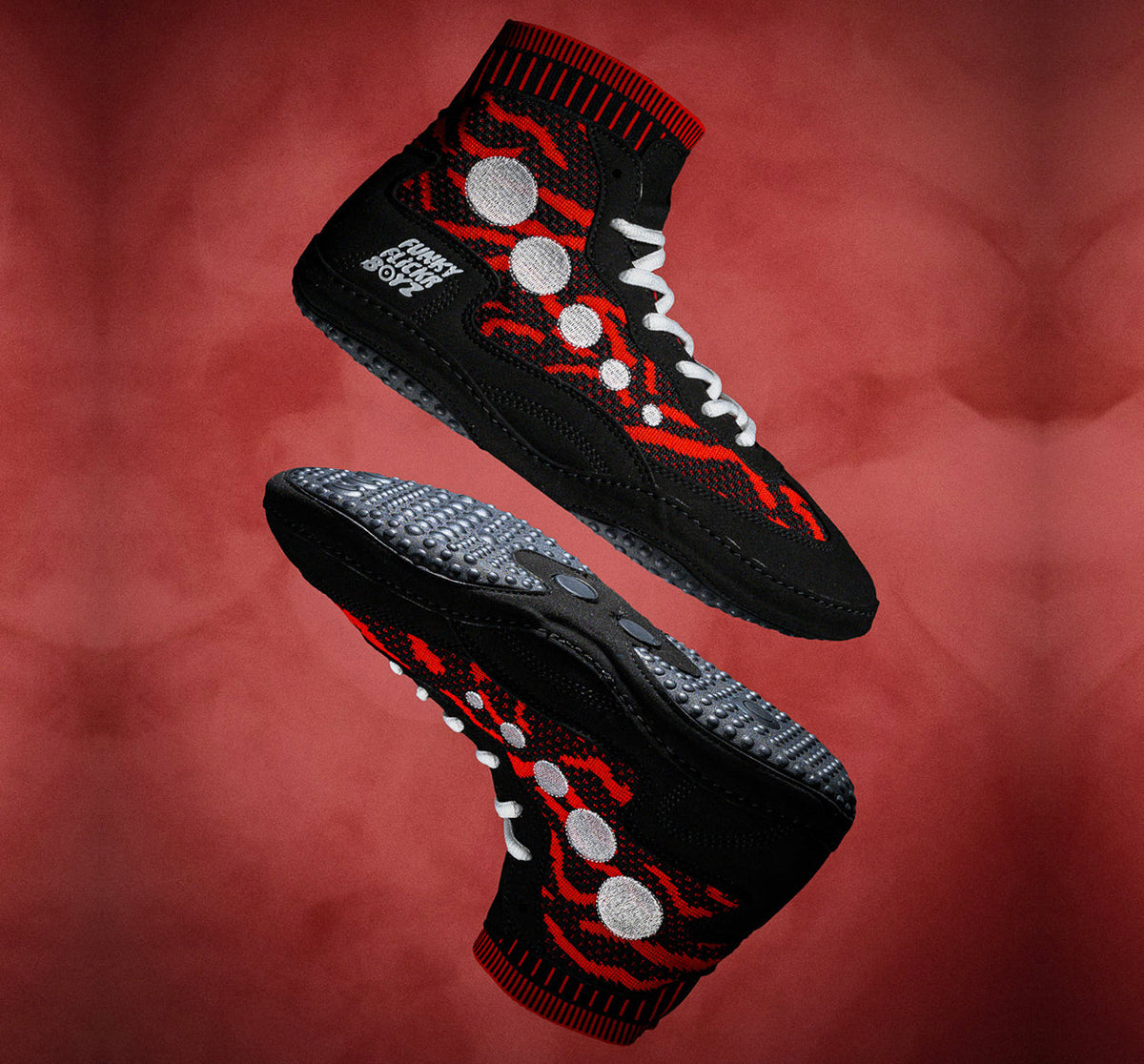
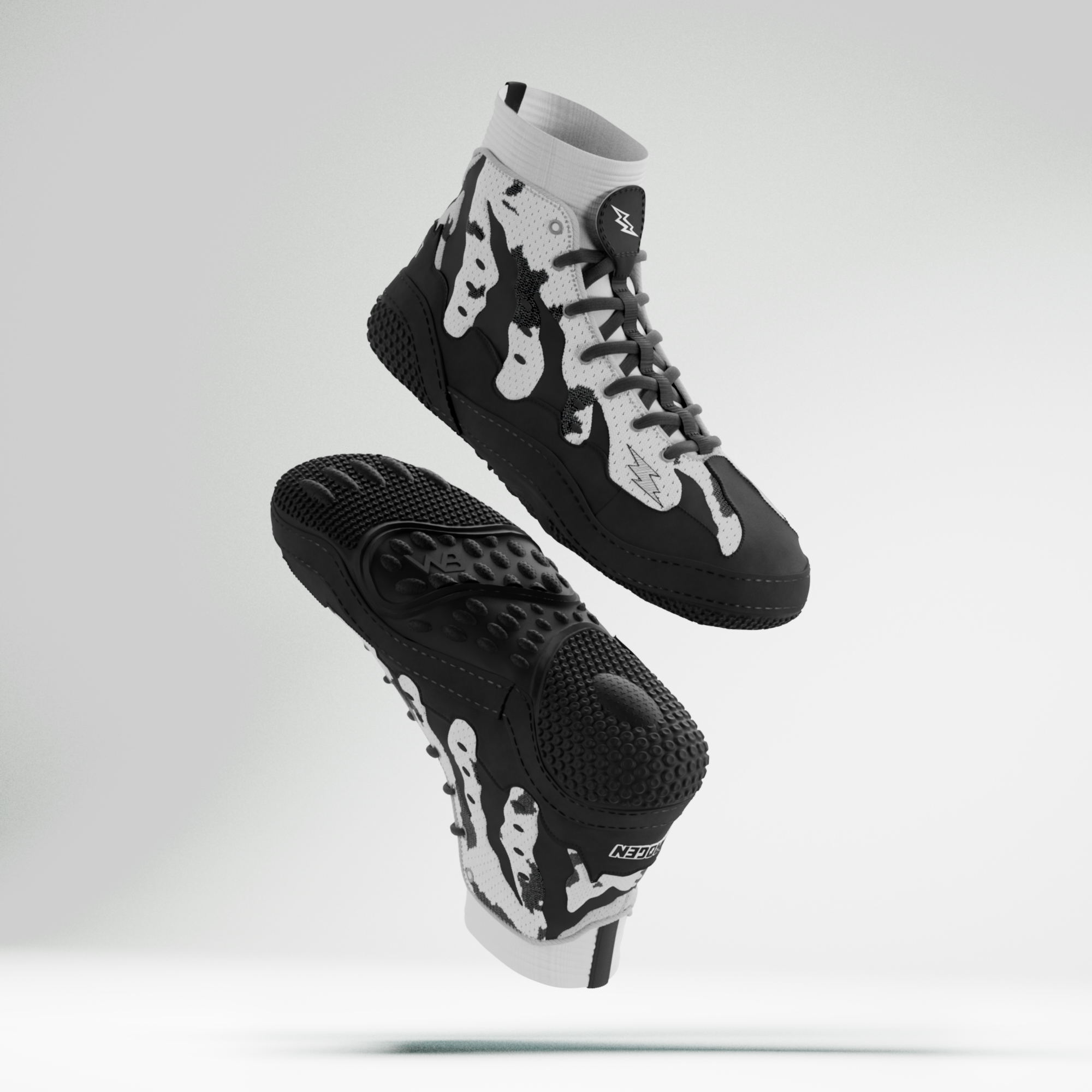
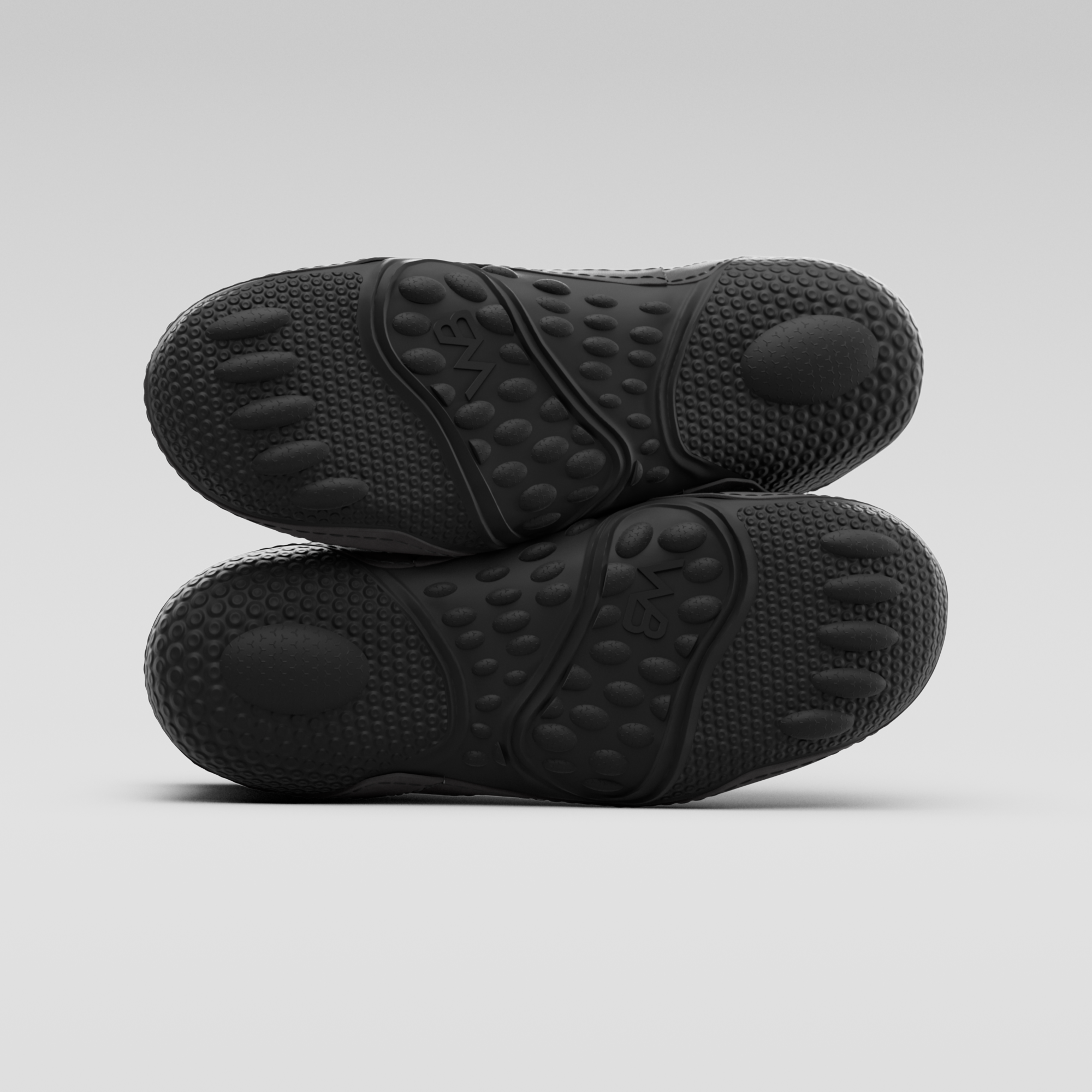
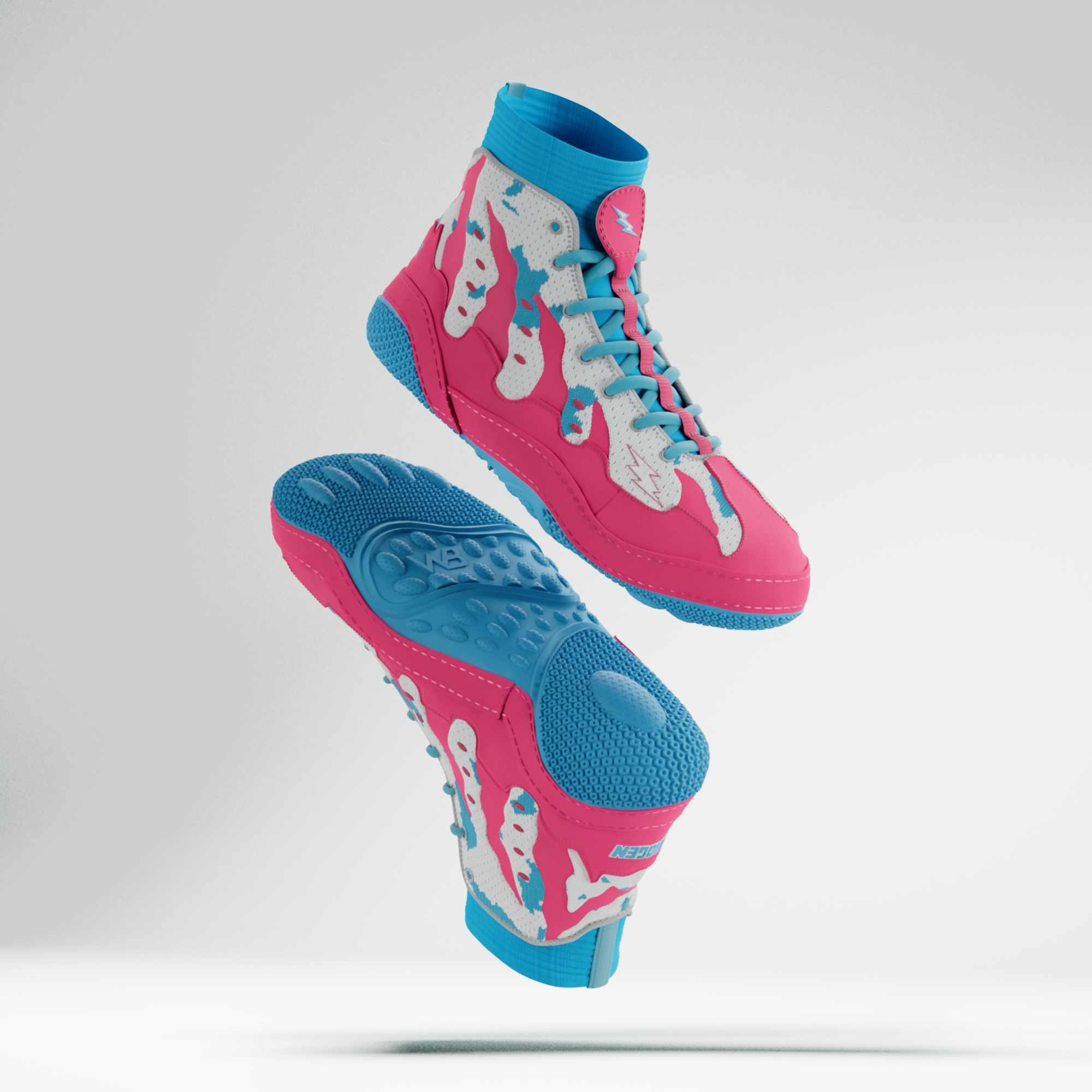
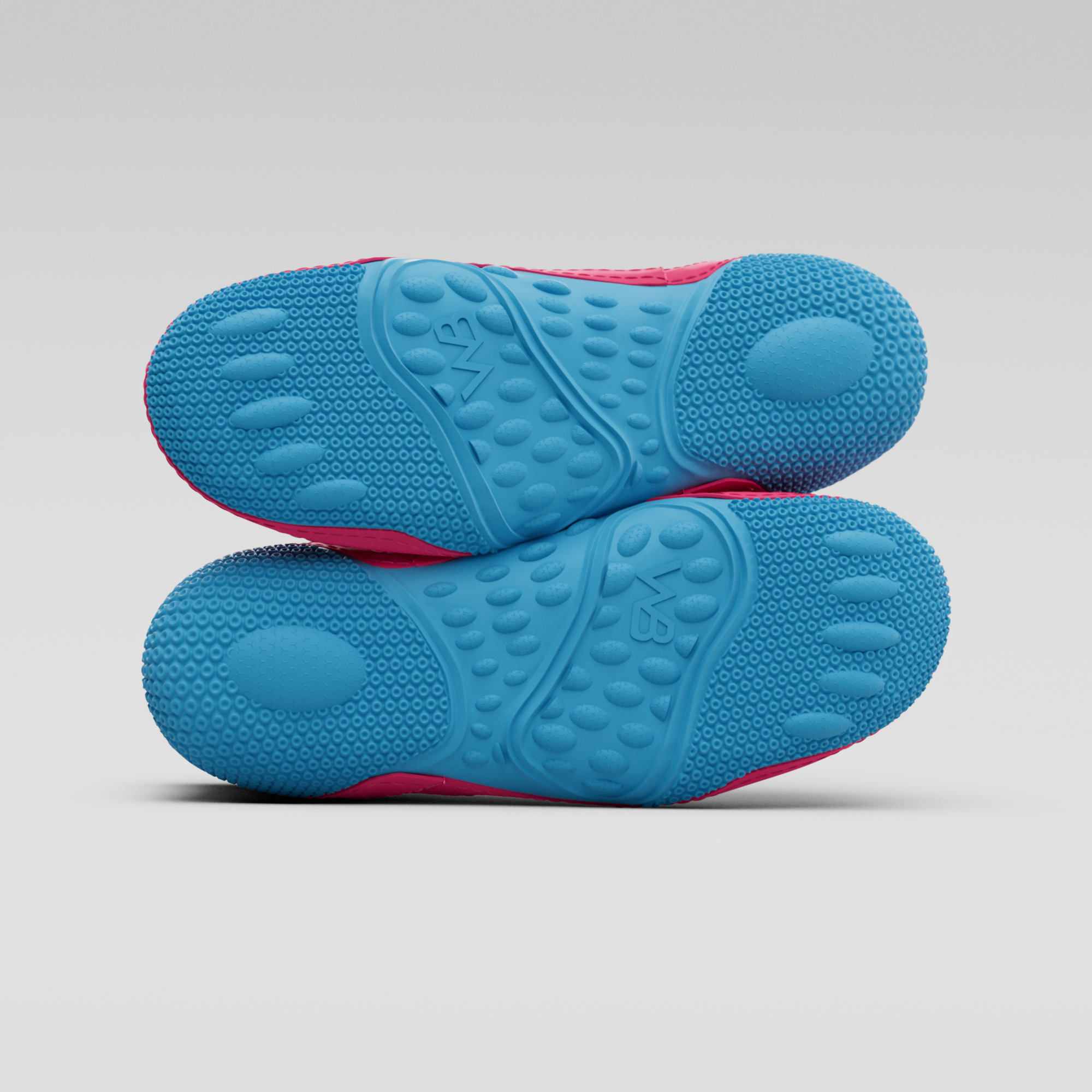
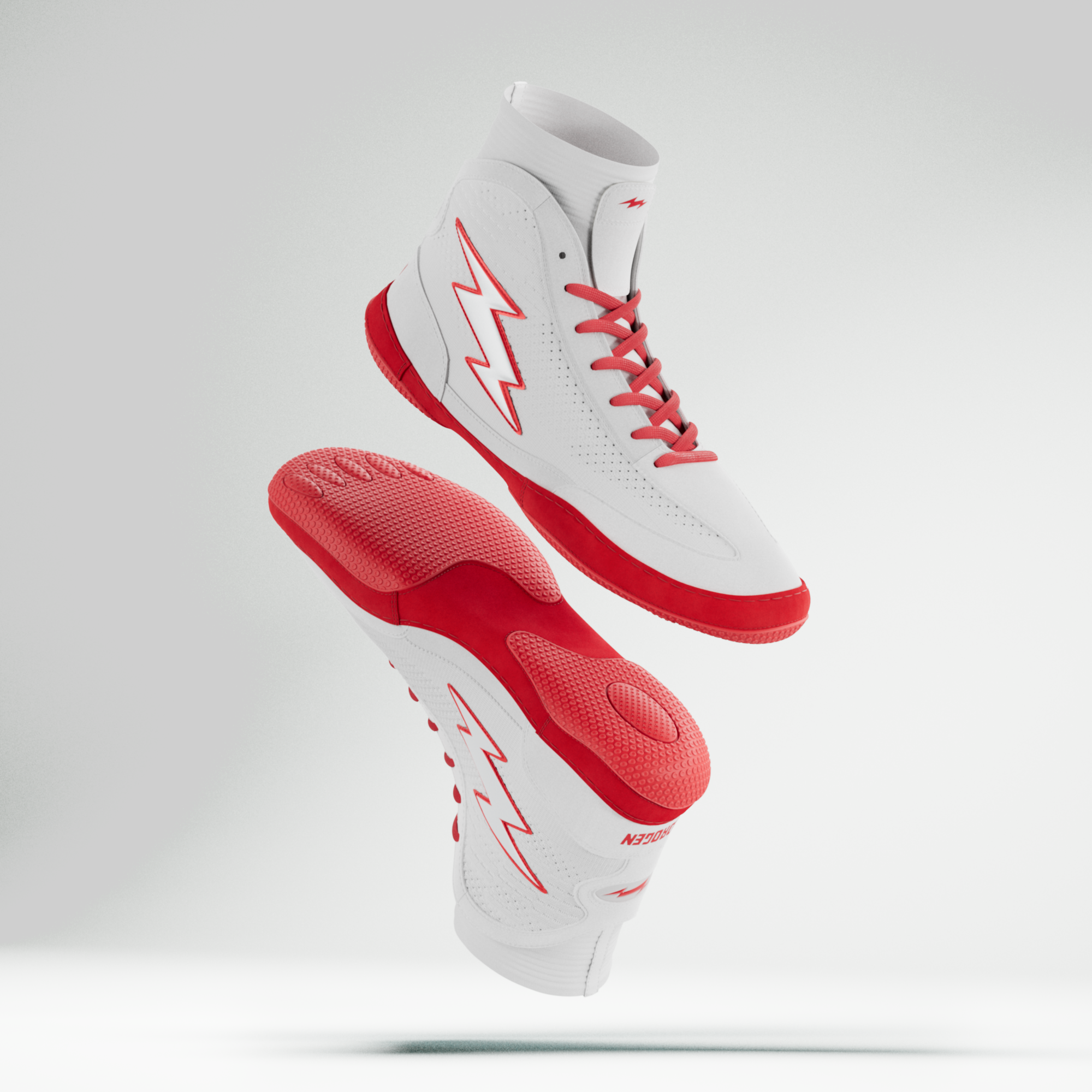
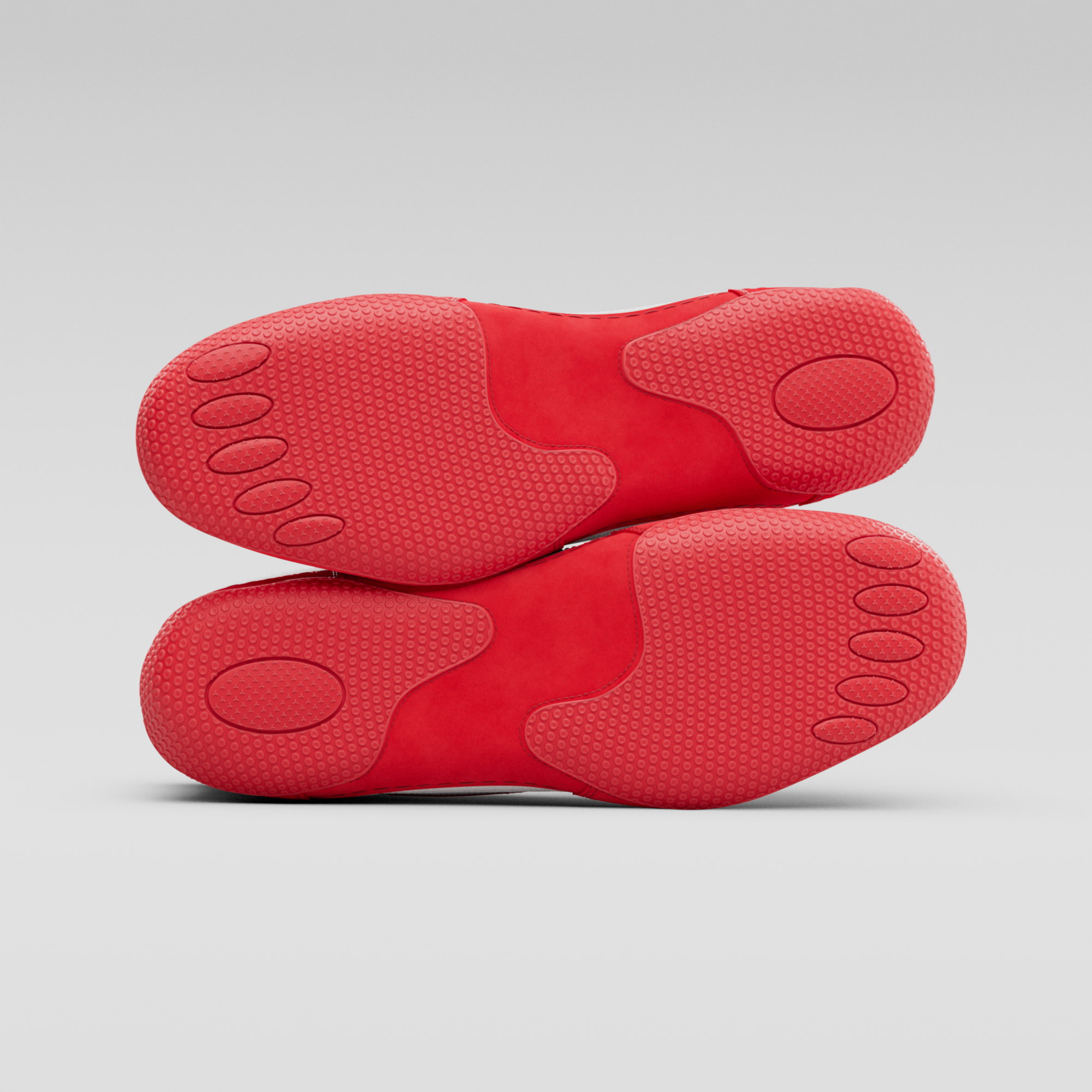
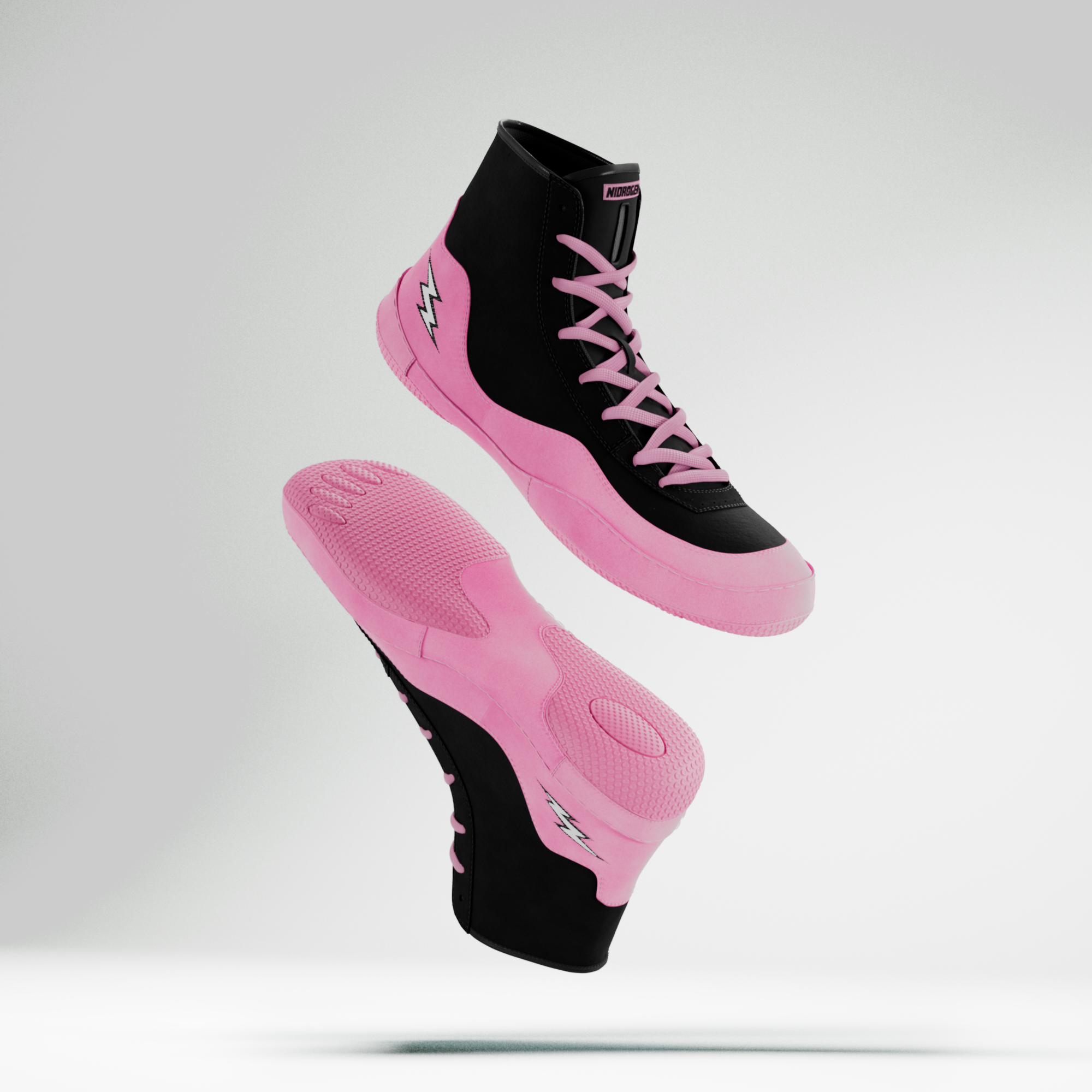
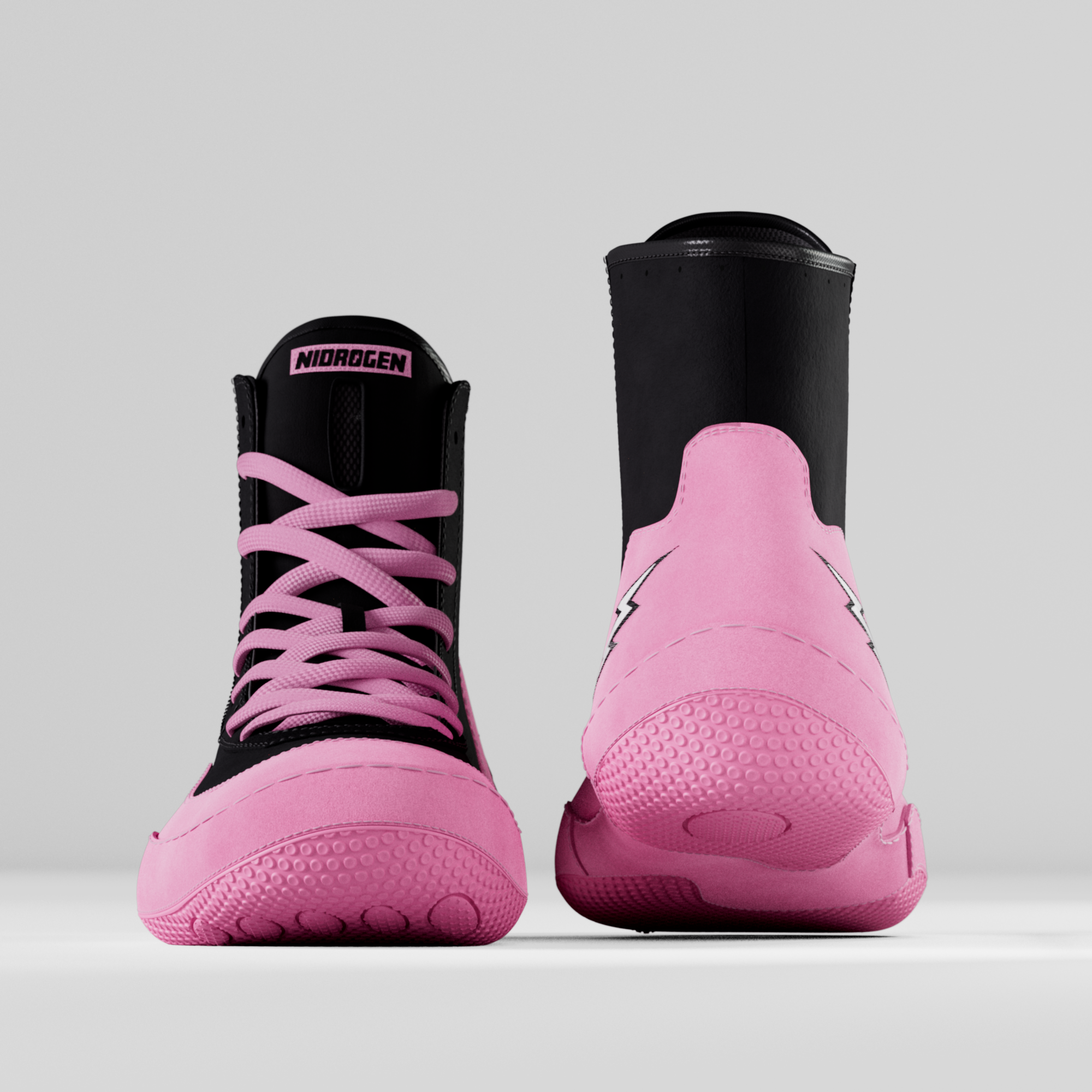
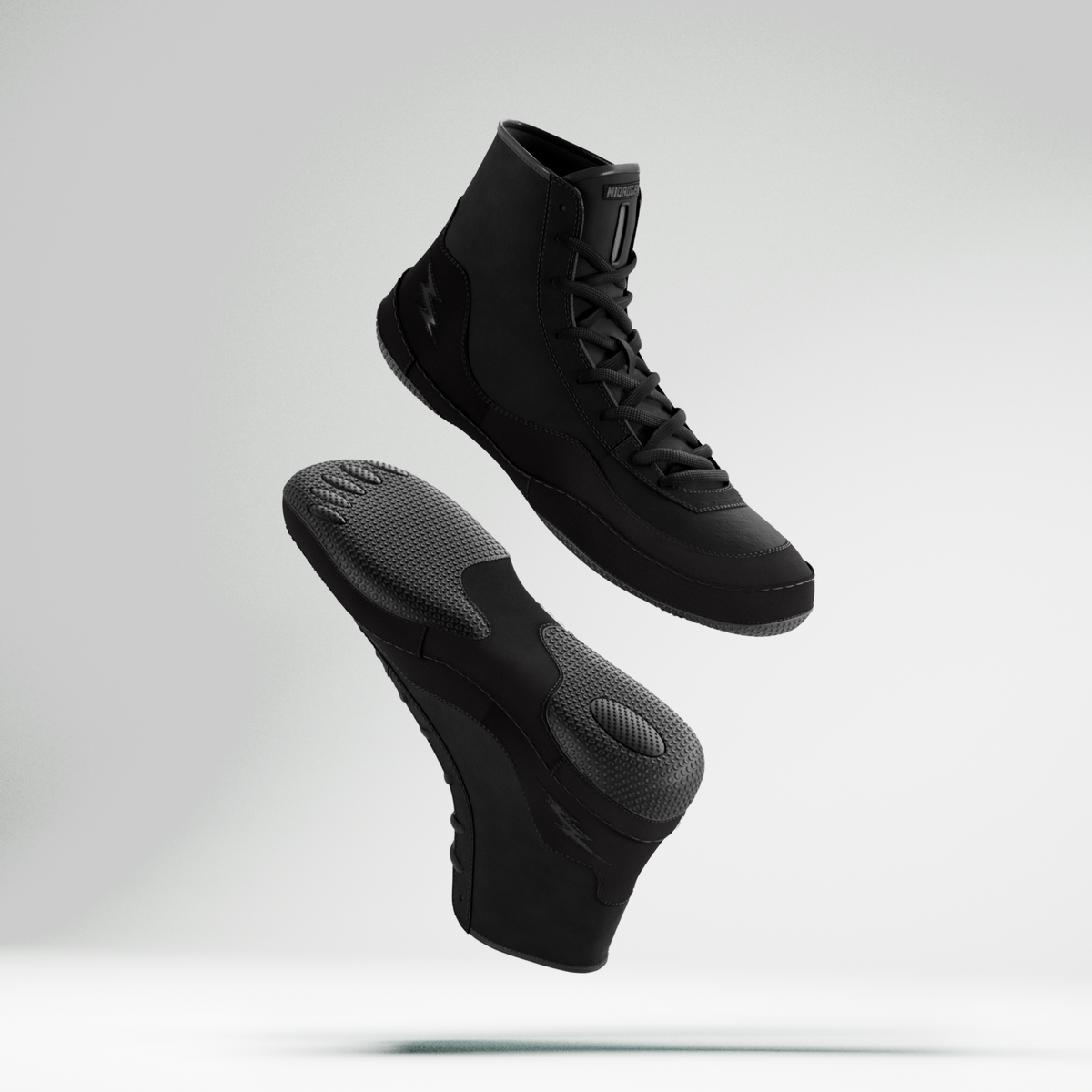
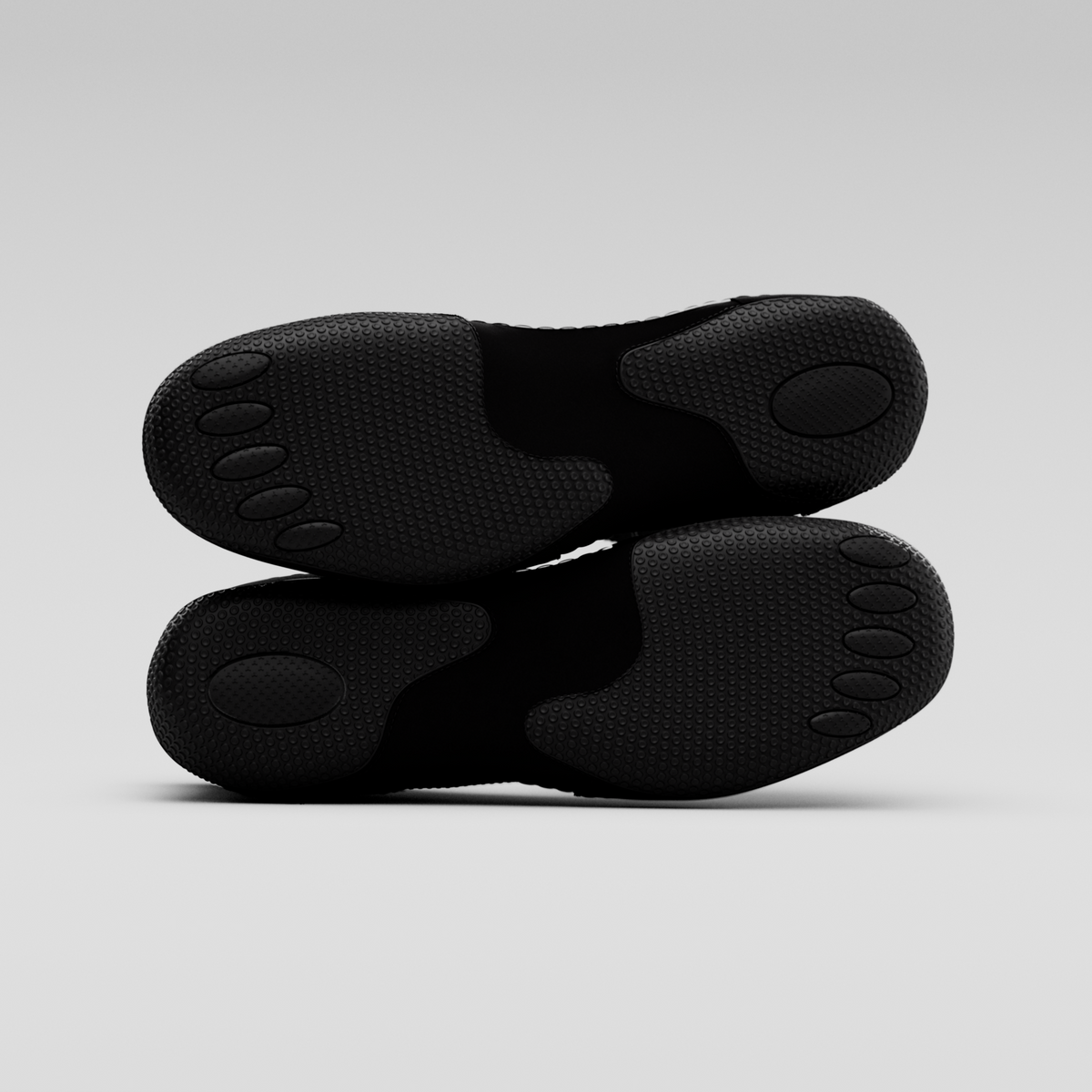
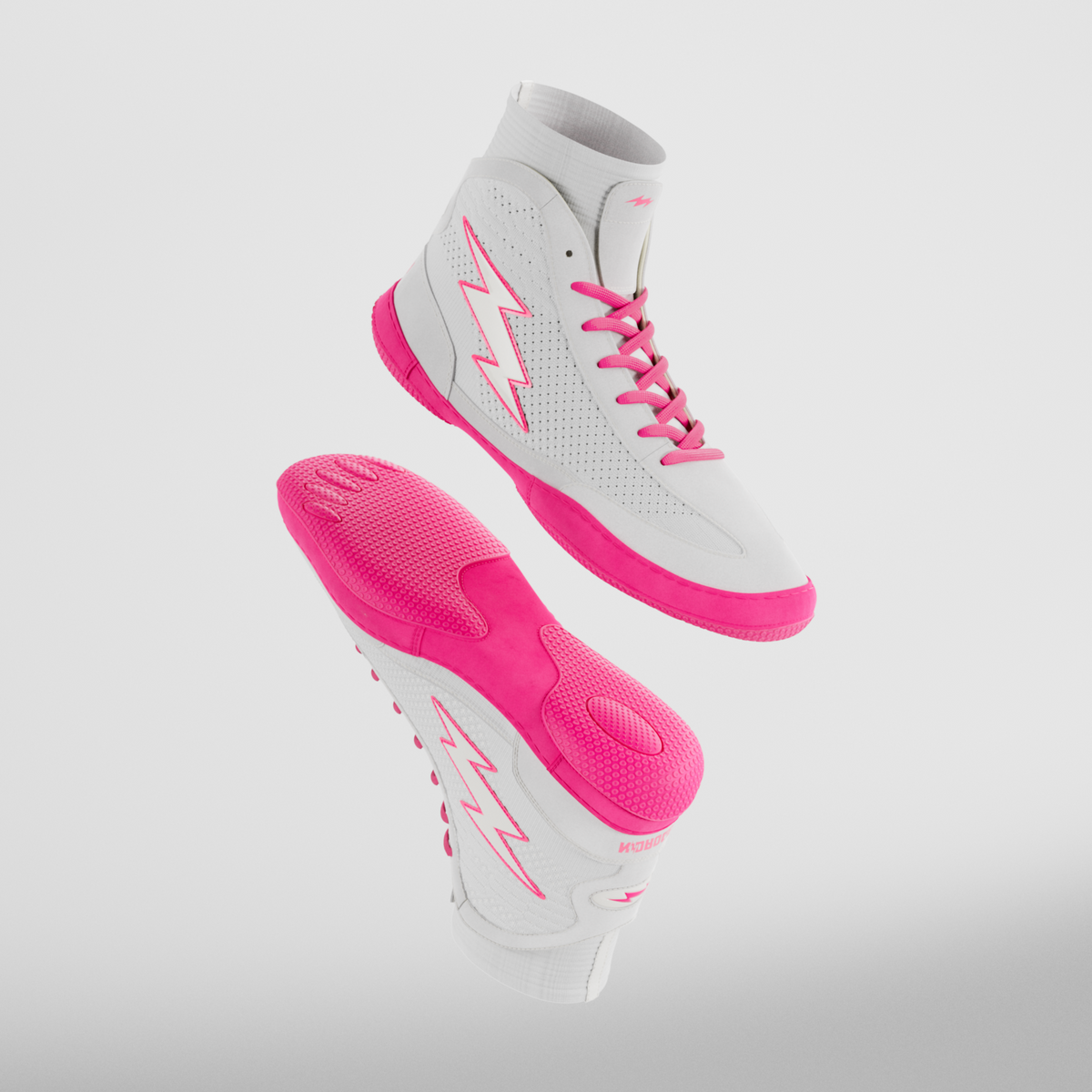
FFB and Nidrogen wrestling shoes use a flat, low-profile sole that keeps you close to the mat. Our rotational grooves and flex channels allow the foot to move naturally while maintaining traction. That connection is not a comfort feature. It is a performance feature that directly affects balance, reaction time, and body awareness during live wrestling.
Traction Patterns Work Against You
The grip on a running shoe is built for forward propulsion.
Lugs, grooves, and tread patterns are designed to push off the ground in a straight line. On a wrestling mat, that grip fights against you. Pivots become sticky. Rotational movement becomes sluggish. You lose fractions of seconds that matter in scrambles.
That is exactly why we developed OctiSole traction, inspired by octopus tentacles, and OrbitGrip anatomical traction. Both systems are engineered to lock into the mat from every angle, during cuts, sprawls, lateral motion, and rotational finishes, without dragging or catching.
Running shoe traction has no equivalent for what happens on a wrestling mat. The difference shows up immediately in live situations.
Weight Slows You Down More Than You Realise
Running shoes are heavier than they look.
Modern running shoes carry foam midsoles, reinforced outsoles, and cushioning systems that add meaningful weight. For running, that weight is justified by the protection it provides.
In wrestling, every extra ounce slows your shots, delays your recovery, and drains your energy faster. That is why FFB and Nidrogen wrestling shoes use FunkKnit performance uppers and AeroFlex side panels to reduce weight while keeping structure. Wrestlers who switch from running shoes to proper wrestling shoes often describe the feeling as suddenly being able to move freely for the first time.
Lightweight construction is not a marketing phrase. It is a functional requirement for fast, technical wrestling.
Ankle Support Works Differently
Running shoes are built for straight-line ankle stability.
They support the ankle in a forward motion context, absorbing impact from heel strike to toe off. That support pattern does not translate to the lateral stress of wrestling.
Quick sprawls, explosive direction changes, and scrambles place stress on the ankle from angles that running shoes are not designed to handle. The result is reduced stability and increased sprain risk during movements that happen constantly in wrestling.
FFB wrestling shoes use FunkKnit ankle collars and internal support cages with zoned stretch panels. This keeps the ankle locked and stable during multidirectional stress while still allowing the natural mobility wrestling demands. Running shoes simply cannot replicate that combination.
Fit Is Not the Same
Running shoes are designed with a wider toe box and extra room for foot swell over long distances.
That fit is intentional for running. In wrestling, it creates problems. Extra room inside the shoe allows internal foot movement during shots and finishes. That movement disrupts balance, reduces control, and adds delay to reactive footwork.
Our SecureLock Lacing System uses an internal support cage that eliminates heel slip and lace drift. Once tightened, your foot stays locked in from warmup through the final whistle. That level of security is impossible in a running shoe that was never designed to provide it.
Breathability Affects Late-Match Performance
This one surprises people.
Running shoes are built with ventilation for steady-state cardio. Wrestling is explosive, chaotic, and generates heat in concentrated bursts. Standard running shoe ventilation cannot keep up with that demand.
Our AirFlo Chambers ventilation system and breathable FunkKnit zones are specifically designed to manage heat and moisture during high-intensity mat work. Cooler, drier feet reduce fatigue and maintain sharper footwork late in matches when the outcome is most often decided.
Final Thoughts From Me
Running shoes are excellent running shoes. That is exactly the problem.
They are optimised for a completely different sport with completely different movement demands. On a wrestling mat, every design advantage they offer in running becomes a disadvantage.
If you are serious about wrestling, proper footwear is not optional. OctiSole traction, FunkKnit construction, SecureLock fit, and AirFlo ventilation exist because wrestling demands technology built specifically for the mat. No running shoe can substitute for that.
Your feet are your foundation. Build it correctly from the start.